
Expanding Access to Higher Education, Purworejo Regency Government Proposes a UNY Campus in Its Area
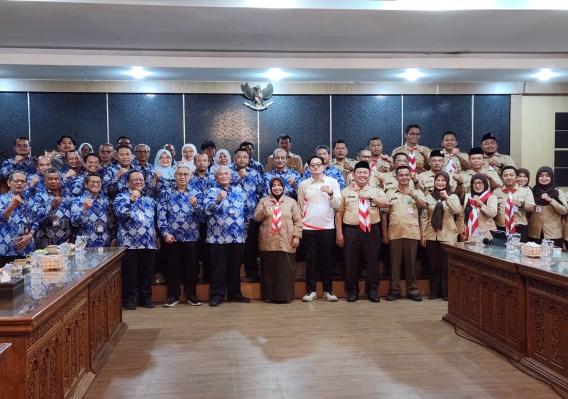
The Government of Purworejo Regency is committed to realizing the establishment of an off-campus study program (Program Studi di Luar Kampus Utama / PSDKU) of Universitas Negeri Yogyakarta (UNY) through strengthened strategic cooperation focused on building a new campus in the region.
This commitment was emphasized during a follow-up working visit regarding the collaboration to open a UNY campus in Purworejo, held at the Purworejo Regency Office on Tuesday (April 14, 2026). The meeting was a continuation of previous synergies between UNY and the Purworejo Regency Government in the development of education, research, and community empowerment.
The Regent of Purworejo, Hj. Yuli Hastuti, S.H., expressed the local government’s full readiness to support the construction of the UNY campus as part of efforts to improve the quality of human resources. “We are fully ready to support this. The presence of this campus is expected to expand access to higher education and improve community welfare,” she stated.
As a concrete form of support, the Purworejo Regency Government has offered three alternative strategic locations: the former Kutoarjo Training Center (covering 1,876 m²), the former Kawedanan Purwodadi area (2.3 hectares), and Wero Village in Ngombol District (9.9 hectares) located near Yogyakarta International Airport (YIA). Participants in the working visit also had the opportunity to inspect all these sites.
The Rector of UNY, Prof. Sumaryanto, emphasized that campus development will begin with an exploratory study to ensure that the study programs offered align with community needs and regional potential. “We want to ensure that the study programs opened truly match the needs of the community and the region’s potential. Therefore, an exploratory study is an important initial step,” he explained.
Furthermore, UNY also opens opportunities for the local government to be involved in recommending lecturers and educational staff to support optimal campus operations.
UNY is also planning to develop study programs in the fields of health, sports, arts, and economics, including the construction of an academic hospital as part of strengthening health education, which will require at least one hectare of land. This development will be supported by feasibility studies, joint research, and strengthening human resource capacity through cross-sector collaboration.
The Vice Regent of Purworejo, Dion Agasi Setiabudi, S.I.Kom., M.Si., emphasized that education is the core spirit of the region. “The Purworejo Regency Government fully supports this initiative. We hope this campus will become a new economic driver, especially in the southern region,” he said.
As a follow-up, both parties agreed to conduct exploratory studies on public interest and technical coordination for campus development to accelerate project realization.
During the discussion, the Chair of the UNY Board of Trustees, Prof. Suyanto, highlighted the importance of public outreach to ensure smooth campus development. He also noted the potential increase in land prices due to speculation. In addition, there are pros and cons, particularly concerns from local higher education institutions about the presence of a new competitor. However, this is seen as part of the process toward a more competitive and higher-quality education ecosystem. Through synergy between UNY and the Purworejo Regency Government, the development of the PSDKU campus is expected not only to become a new education center but also a driving force for regional development. With full support from various stakeholders, Purworejo has the potential to become one of the centers of education and human resource development in the southern region of Java.
This initiative aligns with the Sustainable Development Goals (SDGs), particularly SDG 4 (Quality Education), SDG 8 (Decent Work and Economic Growth), and SDG 17 (Partnerships for the Goals), through strategic collaboration between higher education institutions and local governments in promoting knowledge-based development.