
UNY KKN Students Introduce Maggot Cultivation to Residents of Tegalrejo, Hargowilis, Kokap
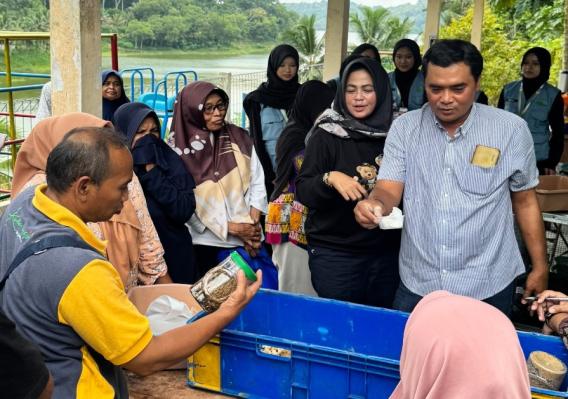
Students participating in the Community Service Program (KKN) of Universitas Negeri Yogyakarta (UNY) conducted a socialization and practical training on maggot cultivation using the Black Soldier Fly (BSF) method in Padukuhan Tegalrejo, Kalurahan Hargowilis, Kapanewon Kokap, Kulon Progo. The activity aimed to educate the community about managing organic waste while also creating new economic opportunities.
The program invited Sus Endarto, a BSF maggot cultivation practitioner from Sleman, as the speaker. During the session, he explained the potential of maggots in decomposing organic waste and their economic value as high-protein animal feed. Household organic waste, which accounts for around 40–65 percent of total domestic waste, can be processed effectively using maggots.
In the practical session, residents were introduced to the life cycle of the Black Soldier Fly, from eggs to larvae, prepupa, pupa, and adult flies. Participants also learned about the process of hatching eggs, raising maggots in bioponds, harvesting the larvae, and processing the residual waste known as “kasgot,” which can be used as organic fertilizer.
The program was initiated by the UNY KKN team consisting of Al Khansa Amadea Kalyana Putri Wibowo, Arzahnata Sholwa Nola Angel, Avif Ananditya Prabowo, Daniel Febrianto Suhardi, Kaila Diyah Nabila, Nafiatun Uqba, Nashrinda Maharani, Rara Tandaya Ivandi, Safa Paramesti Azhari, and Ulfah Daniasari. The students were involved in preparing the materials, coordinating with village officials, and assisting residents during the training sessions.
According to team leader Avif Ananditya Prabowo, the program was designed based on the real needs of the community. Through this activity, the students hope residents can independently implement maggot cultivation as an environmentally friendly solution for organic waste management while also creating additional income opportunities.
The enthusiasm of local residents was evident during the activity, as many participants expressed interest in starting small-scale maggot cultivation at home using household kitchen waste.