
Bringing Contextual History Learning Forward, Roro Wilis Offers an Innovative Model in Secondary Schools
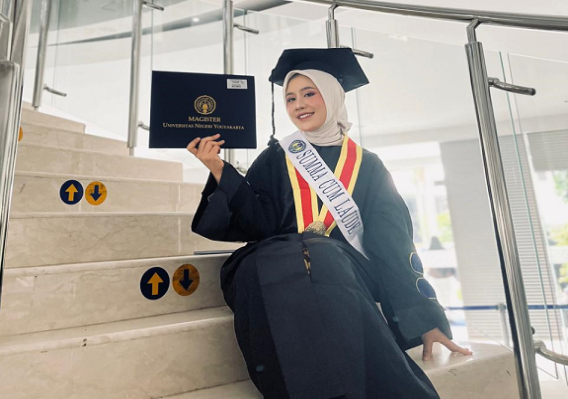
Education in the Society 5.0 era demands that the world of education go beyond mere transfer of knowledge. This challenge was addressed by Roro Wilis, M.Pd., through her master’s thesis which examined the implementation of Contextual Teaching and Learning (CTL) in history learning at SMA Negeri 9 Yogyakarta. The study emphasized that history learning can be made more meaningful by connecting lesson material to the real life context of students.
Roro Wilis is a graduate student of the Master’s Program in History Education in the Faculty of Social and Political Sciences at Universitas Negeri Yogyakarta. Through her academic research, she highlighted that history learning still strongly relies on lecture and memorization methods. This approach is considered less effective in developing students’ critical thinking, creativity, and appreciation of national values, even though the Merdeka Curriculum already offers significant space for differentiated and project-based learning.
The research used a qualitative approach with a case study method. Data was collected through non-participatory observations, in-depth interviews, and document studies involving the vice principal for curriculum, history teachers, and students from grades 10 to 12. Field research began with initial observations to map the existing practices of history learning.
According to Roro, history learning should not stop at memorizing events, but should help students understand the meaning and relevance of those events in their lives today. With the CTL approach, students are guided to actively build knowledge through direct experience, social interaction, and the use of local cultural contexts as learning resources.
The research findings showed that history learning at SMA Negeri 9 Yogyakarta already represented seven main CTL components: Constructivism Inquiry Questioning Learning community Modeling Reflection Authentic assessment
These components were integrated within a meaningful learning framework that encourages students to actively construct their own understanding.
Examples of contextual practices in history classes include demonstrations of local traditions, analysis of historical archives, visits to learning sources, and production of historical films and vlogs as media to connect the past with present-day reality.
Theoretically, this research is grounded in social constructivism, which emphasizes the importance of interaction and scaffolding in the learning process. In the CTL model, the role of the teacher shifts from being the center of information to a facilitator and mediator of learning.
However, Roro also noted several challenges, such as limited classroom time and the complexity of implementing field-based projects. To address these, strategies for time management and meaningful project prioritization were applied so that learning remains aligned with CTL principles.
More than an academic study, this thesis contributes to the development of contextual and humanistic history learning practices. The research findings have also been published in several accredited journals as well as collaborative book chapters. This work helped Roro achieve a perfect Grade Point Average (GPA) of 4.00 at the Universitas Negeri Yogyakarta graduation ceremony in February 2026.