
Story of an Alumni Surviving Aceh’s Worst Flood — UNY Stands Strong in the Darkest Times
The severe flooding in Aceh at the end of November 2025 became the most difficult experience in the life of Dr. Nurdin, an alumnus of the Doctoral Program in Educational Research and Evaluation at Universitas Negeri Yogyakarta (UNY), who witnessed his hometown in Peureulak, East Aceh Regency turn into a sea of water and mud after days of nonstop rain.
According to Dr. Nurdin, rain began on Friday, November 21, 2025, at moderate intensity — something local residents were used to because annual flooding often occurred along the Peureulak River. But everything changed on November 25 when heavy rain fell continuously, the sky stayed dark all day, and the power went out. Water quickly entered homes — a situation that hadn’t happened in Leuge Village since a major flood in 1971. Residents were forced to flee to upper floors as the water rose rapidly and currents became strong.
For nearly five days, rain didn’t stop. Roads became impassable; phones lost power and signal; and hundreds of residents gathered in the village meeting place with dwindling food supplies. Rice became scarce, motorized boats were limited, and fuel was hard to find. Other areas such as Aceh Tamiang and parts of Gayo highlands faced even worse conditions, with sharp increases in the prices of rice and fuel.
The flooding not only submerged homes but also destroyed paddy fields, plantations, and fish ponds, leading many people to lose their livelihoods. Even after the rain subsided, the floodwaters didn’t immediately recede, leaving key areas like Idi City — the capital of East Aceh — without electricity, closed banks, and no clean water supply. Locals had to survive on whatever supplies they’d managed to secure before the flood.
In the midst of isolation and anxiety — with no way to reach family in other parts of Aceh — Dr. Nurdin received a message from Prof. Heri Retnawati, Director of the Planning and Finance Directorate at UNY. That contact became a much-needed mental support, giving him a sense of connection and hope through communication from Yogyakarta.
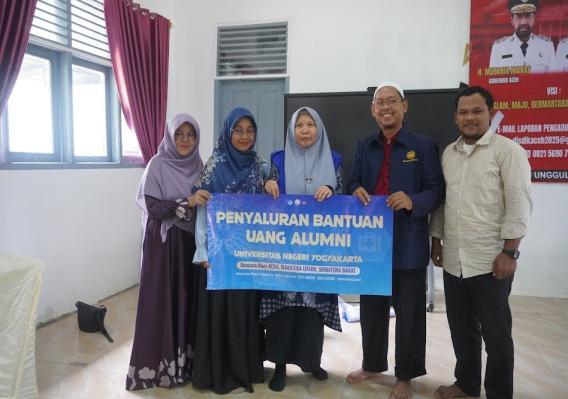
This communication sparked the UNY Peduli Bencana (UNY Cares for Disaster) initiative. Support collected from the UNY academic community and alumni was distributed directly to flood victims in East Aceh, Aceh Tamiang, and Gayo areas, door-to-door. The assistance wasn’t only about material aid — it also showed empathy and moral support at a time when government help had not fully reached all regions.
Dr. Nurdin expressed that, as an alumnus, he felt proud that his alma mater was there in a quiet yet real way — providing support in the emergency when it was most needed. He hopes UNY continues to strengthen alumni networks, potentially establishing an UNY Alumni Association in Aceh and developing education support programs in disaster-affected schools so students don’t miss out on learning. He also suggested involving UNY students and lecturers in such efforts, including through PPL (teaching practice) and humanitarian community service programs.
Dr. Nurdin’s story not only reflects the resilience of disaster victims, but also highlights how humanity and solidarity from a university community can reach the remotest areas even during the darkest times, embodying the spirit of shared support and care.