
UNY KKN-M Students Introduce Eco-Friendly Natural Insecticide Incense and Botanical Pesticide in Padukuhan Sembung, Pakem
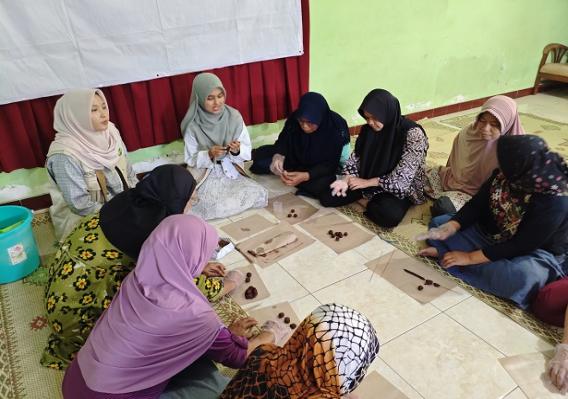
Students participating in the Community Service Program (KKN-M) at Universitas Negeri Yogyakarta carried out a community empowerment program by introducing natural insecticide incense and botanical pesticides in Padukuhan Sembung, Purwobinangun Village, Pakem District, Sleman Regency, Yogyakarta Special Region. The program aimed to offer environmentally friendly solutions for insect and crop pest control using local natural materials.
The KKN-M activity was implemented by a student team consisting of Ayu Wardani, Said Mahendra Danarputra, Muhammad Wildan Apriansyah, Jasmine Dwi Andini, Ami Nurul Hidayah, Dea Meliana Putri, Miko Putra Pratama, Torry Cahya Alfianzha, and Cindy Zogy Noviana. Together, they initiated an educational and practical program that could be directly applied by local residents.
One highlighted innovation introduced was a natural insecticide incense product called HERBASCENT. This incense serves to repel mosquitoes while also functioning as an aromatherapy product. It is made from natural materials including coconut fiber, gemor wood, and essential oils, making it safe for human health and environmentally friendly. Beyond repelling insects, HERBASCENT can also be used for relaxation and religious activities.
According to the team leader Torry Cahya Alfianzha, the program was based on the community’s need for safe and easily made pest control products. The aim was to provide a simple, locally made solution that residents could immediately use. The natural incense and botanical pesticides are expected to be safe, eco-friendly, and have economic potential for local communities.
Coconut fiber was chosen as a primary ingredient because its composition makes it easy to ignite without high heat, and it makes use of abundant organic waste in the Padukuhan Sembung area. Gemor wood contains natural active compounds such as alkaloids, flavonoids, tannins, and triterpenoids, which have insecticidal and antimicrobial properties. These ingredients are paired with plant-distilled essential oils that add a natural and calming aroma.
HERBASCENT was developed in various scent variants such as sandalwood, clove, agarwood, musk, lavender, and vetiver. The production process is simple and easy to practice, making it suitable to develop into a local MSME product. During the KKN implementation, the students also held live demonstrations on how to make the incense, from mixing the ingredients to the drying stage.
In addition to the insecticide incense, the students also introduced a botanical pesticide made from papaya leaves to control plant pests. This botanical pesticide uses papain enzymes effective in controlling pests like aphids, thrips, armyworms, and mites. This pesticide is considered safer because it breaks down easily in nature, doesn’t leave harmful residues, and is safe for humans and livestock.
The botanical pesticide can be made with simple tools found in households, and its application involves spraying the solution on affected plant parts two to three times per week, in the morning or late afternoon.
Through the implementation of this KKN-M 2025 program in Padukuhan Sembung, UNY students contributed to supporting several Sustainable Development Goals (SDGs). These included SDG 3 (Good Health and Well-Being) through safe pest control products, SDG 12 (Responsible Consumption and Production) through the use of natural materials and organic waste, SDG 13 (Climate Action) by reducing synthetic chemical use, and SDG 15 (Life on Land) through environmental preservation and biodiversity protection.