UNY KKN Students Educate Residents on Processing Tofu Waste into Environmentally Friendly Liquid Organic Fertilizer
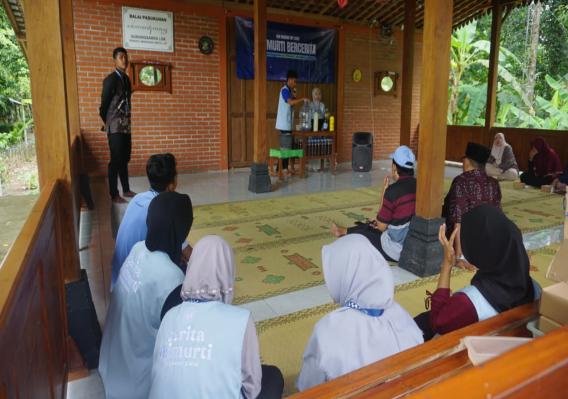
A team of Universitas Negeri Yogyakarta (UNY) students conducting community service (KKN) in Padukuhan Gunungsaren Lor, Trimurti Village, Srandakan District, Bantul organized training on how to make liquid organic fertilizer (POC) from tofu processing waste. This activity, initiated by the KKN students, received positive responses from local residents because it offered a simple, low-cost solution that benefits both the environment and plants.
The educational session was led by KKN team members, including Eva Fatma Riana Dewi, Arifa Dwi Utami, Adelita Azahra, Rangga Adi Saputra, Rofiah Baghiz, Muhammad Naufal Yudha Faris Fadhiilan, Salsabila Arizki, Nur Aida Rahma, and Aditya Putra Pratama, with guidance from group leader Dwi Septiawan. They provided detailed explanations about the process of turning tofu waste into safe, easy-to-use liquid fertilizer.
The students introduced the ingredients used, such as 1.7 liters of tofu waste, 300 ml of molasses, and 150 ml of a fermentation starter. Residents were also informed about different types of fermentation starters they could use, including rice washing water, Effective Microorganisms (EM4), Trichoderma, Gliocladium, and Rhizobium. These starters help speed up the fermentation process so the tofu waste breaks down properly and produces high-quality liquid fertilizer.
A step-by-step demonstration was conducted. First, molasses and the starter were mixed thoroughly with the tofu waste, then placed into a jerrycan and sealed tightly. During the 7–14 day fermentation period, the jerrycan lid was opened each day to release gas from the biological process and ensure optimal fermentation. Once finished, the liquid fertilizer turns dark brown to black with a distinctive scent.
In addition to production, the students explained how to use the POC on plants. The recommended method is to mix 5–10 caps of POC with 1 liter of water and water plants between 6:00–7:00 AM. This can be done daily or every two days for optimal results. This method is considered more economical and environmentally friendly than chemical fertilizers, whose prices continue to rise.
According to KKN group leader Dwi Septiawan, the activity was a concrete form of contribution to the community. “We hope residents can practice making this liquid organic fertilizer independently. Besides utilizing tofu waste that was previously unused, the POC can improve soil fertility without harming the environment,” he said.
Residents showed high interest, asking many questions during the discussion. They said the innovation was very relevant to their needs since many have ornamental plants and home gardens. They also noted that the easily available materials made them confident they could produce the liquid organic fertilizer sustainably.
The activity not only helped reduce organic waste but also encouraged the adoption of environmentally friendly farming practices. This training in processing tofu waste into liquid organic fertilizer aligns with Sustainable Development Goals (SDGs) — especially SDG 12 (Responsible Consumption and Production) and SDG 13 (Climate Action) — by promoting waste reduction, self-sufficiency in production, and awareness of environmental stewardship.