
UNY Biology Education Students Conduct Field Study on Environmental Science and Natural Resource Conservation in Girimulyo, Kulon Progo
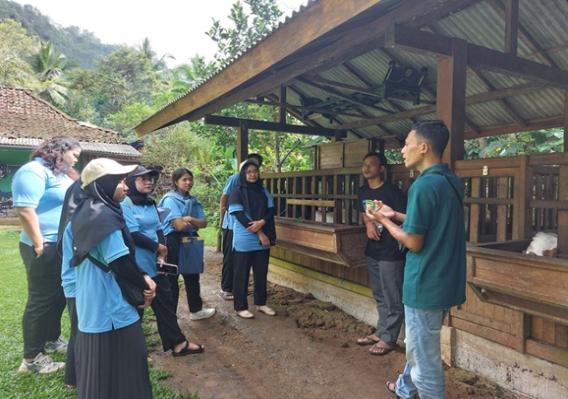
The Biology Education Study Program of Universitas Negeri Yogyakarta (UNY) conducted a field study on Environmental Science and Natural Resource Conservation in Girimulyo Sub-district, Kulon Progo, specifically in Gunung Kelir Hamlet, Jatimulyo Village, and Tegalsari Hamlet, Purwosari Village. The activity was carried out over two days and one night and was attended by 88 students, accompanied by two course lecturers.
The field learning focused on two main themes: bird conservation in Jatimulyo Village and family medicinal plant (TOGA) conservation in Purwosari Village. To optimize learning outcomes, the students were divided into two groups of 44 participants, each assigned to a specific practical topic.
Data collection was conducted through field observations and interviews with various community groups. In Gunung Kelir Hamlet, students interacted with local youth organizations (Karang Taruna), women’s groups (PKK), secondary crop farming communities, livestock farmer groups, and managers of Sungai Mudal Ecotourism. Meanwhile, in Tegalsari Hamlet, students gathered information from the Women Farmers Group (KWT), Lestari Purwosari Community, Karang Taruna, TOGA groups, and local farmer groups.
During the activity, students studied strategies for conserving local bird species and managing their habitats in Jatimulyo. In Purwosari, learning activities focused on the sustainable utilization of family medicinal plants as a form of plant conservation based on community empowerment.
The activity committee chair, Ramdan Agung Anugrah, stated that the program provided a highly valuable learning experience. “It was truly exciting to have the opportunity to learn directly about bird conservation in Jatimulyo while interacting with the community to explore ongoing conservation practices. We gained many new insights during our two days and one night in the field. My message is to stay enthusiastic for the bird conservation communities in Jatimulyo. Thank you for accompanying us. And last but not least, continue to have a positive impact on the environment and society,” he said.
A similar sentiment was shared by another participant, Oktaviana Ersa Ramadhani, who emphasized that direct engagement with the community made the learning process far more meaningful. “This field study felt very different because we interacted directly with the community, allowing us to gain a great deal of valuable knowledge, especially related to conservation,” she explained.
One of the course lecturers, Rio Handziko, expressed his hope that the activity would strengthen students’ understanding of the importance of natural resource conservation and encourage the application of scientific knowledge in real-life contexts. He added that experiential, field-based programs such as this will continue to be developed to enrich the learning process.
This field study also supports the achievement of the Sustainable Development Goals (SDGs), particularly SDG 4 (Quality Education), SDG 11 (Sustainable Cities and Communities), and SDG 15 (Life on Land), through conservation-based field learning and active community engagement.