
Herbal Soap from Waste Cooking Oil, Vegetable Waste and Fruit Waste
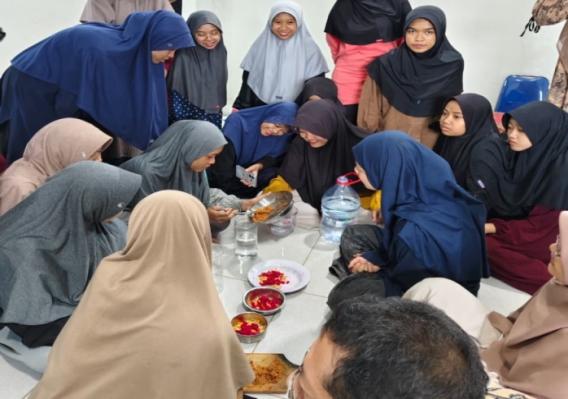
A team from the Department of Chemistry Education, Faculty of Mathematics and Natural Sciences (FMIPA) at UNY — led by Prof. Dr. Eli Rohaeti, M.Si., Dr. Suwardi and Dini Rohmawati, Ph.D. — conducted a community-service programme (PKM) in 2025 with partners in the area of Muja Muju, Umbulharjo, Yogyakarta City, including students’ dormitory (PPM) and surrounding residents.
In this activity, the team assisted residents in processing household waste — such as used cooking oil, leftover fruit and vegetable scraps — into eco-enzyme and herbal soap. The products have features such as strong antibacterial and antifungal properties.
According to Prof. Eli Rohaeti, the issue to be addressed is the large amount of waste generated by the community (used cooking oil, unused vegetable/fruit parts) that, if unmanaged, leads to environmental pollution and health risks. Yet this waste still has economic potential. For example, used cooking oil can be the main raw material for making soap; vegetable and fruit waste can be fermented into eco-enzyme compounds used as additives in soap production.
The training uses simple, low-cost materials and basic equipment, so community members can follow it and even develop it as an independent business. The aim is to increase the residents’ entrepreneurial spirit and self-reliance, ultimately improving their incomes and economic condition.