
Real Action of UNY PLK Students: Community Service Building a Fence with Tangkilan Residents
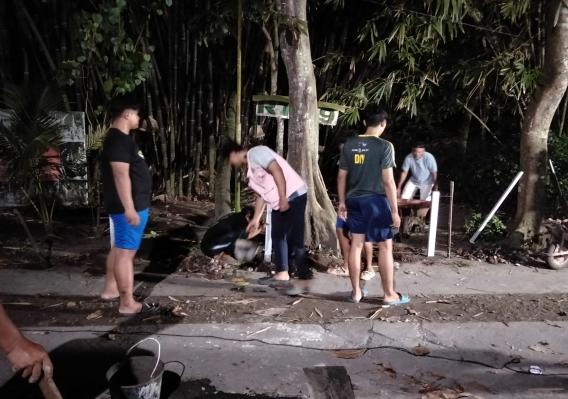
Students participating in the Pembelajaran Luar Kampus (PLK) program from Universitas Negeri Yogyakarta once again demonstrated their social concern through a community service (kerja bakti) activity together with local residents. This time, the activity took place in Tangkilan Hamlet, Sumbermulyo Village, Bambanglipuro District, Bantul Regency.
The activity involved a team of students consisting of Muhammad Khoeruddaffa, Muhammad Yasfa Al Mutaqi, Rizky Nur Hayati, Septioana Isro Paulila, Sonya Andriana Putri Wardhani, Devita Anggraeni, Amilia Putri Wibowo, Sad Surya Angga, Annisa Sandiena Fitra, and Muhammad Rahbar Hakimi.
Together with the residents, the students worked collaboratively to build an environmental fence. This initiative was carried out as a form of mutual cooperation (gotong royong) aimed at improving the safety, orderliness, and aesthetics of the neighborhood.
Beyond physical development, the activity also served as a means to strengthen social bonds between students and the community. Through direct interaction and cooperation, values such as solidarity, teamwork, and social responsibility were reinforced among all participants.
This program reflects the essence of experiential learning, where students are encouraged not only to gain knowledge in the classroom but also to contribute real solutions and tangible benefits to society. The PLK program itself is designed to provide students with direct experience in community engagement and empowerment.
The collaboration between students and residents is expected to foster a sustainable spirit of mutual cooperation and strengthen community resilience. Moreover, such initiatives contribute to the achievement of the Sustainable Development Goals (SDGs), particularly SDG 11 (Sustainable Cities and Communities), SDG 16 (Peace, Justice, and Strong Institutions), and SDG 17 (Partnerships for the Goals).
Overall, this activity highlights how simple, collective actions—like building a neighborhood fence—can create meaningful impacts in strengthening community ties and improving living environments.