
UNY PLK Students Teach Watuadeg Residents to Process Salak Peel into an Economically Valuable Herbal Drink
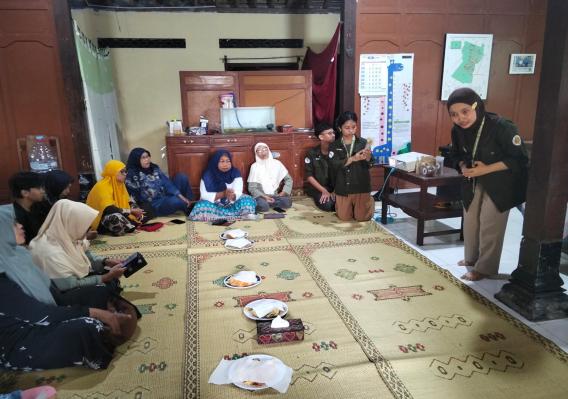
Students participating in the Field Learning Program (PLK) from Universitas Negeri Yogyakarta carried out a community empowerment initiative in Watuadeg Village by teaching local residents how to process salak peel waste into herbal wedang (traditional herbal beverage) with economic value. The program aimed to optimize the utilization of agricultural waste while opening opportunities for community-based micro-enterprises.
The activity stemmed from the abundance of salak (snake fruit) peel waste in the area, which had previously been discarded without further use. Recognizing its potential, the UNY PLK students introduced an innovation by transforming the peels into a healthy herbal drink through a simple and practical production process that could be replicated independently by local residents.
During the training, residents received education regarding the benefits and nutritional properties of salak peel, which contains antioxidants and compounds beneficial to health. Participants were then guided through every stage of the production process, beginning with selecting and cleaning the peels, drying techniques, boiling methods, and flavor formulation to create a pleasant and marketable herbal beverage.
One of the student representatives explained that the initiative was designed not only as an environmental solution but also as an effort to improve the local economy.
“We hope this activity can encourage residents to view salak peel not as waste, but as a product with added value and business potential,” the student explained.
Residents of Watuadeg enthusiastically welcomed the program and actively participated in the hands-on training sessions. They expressed optimism that the herbal wedang product could become a village specialty and create additional household income if developed further.
In addition to production training, students also introduced basic knowledge of product packaging and marketing strategies, enabling residents to better understand how to transform home-made products into goods with competitive market value. This educational approach was expected to foster entrepreneurial spirit among the community.
The initiative also reflects UNY’s commitment to implementing community service programs that directly address local challenges through innovation and empowerment. By combining local potential with practical knowledge, the program is expected to contribute to creating a more sustainable and economically resilient village community.
This activity aligns with the Sustainable Development Goals (SDGs), particularly SDG 3 (Good Health and Well-being), SDG 8 (Decent Work and Economic Growth), SDG 12 (Responsible Consumption and Production), and SDG 17 (Partnerships for the Goals).