
UNY KKN Students Hold Eco Enzyme Making Training in Punukan, Wates, Kulonprogo
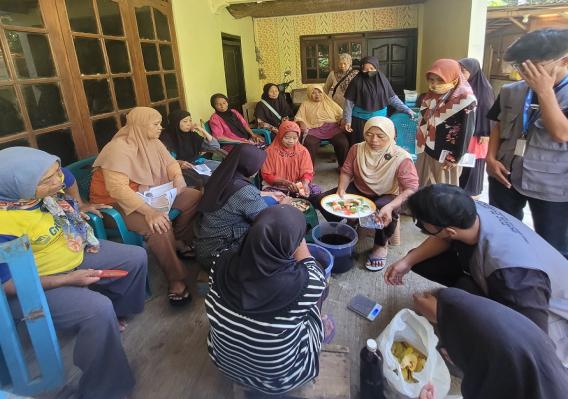
Students participating in the Community Service Program (KKN) at Universitas Negeri Yogyakarta (UNY) organized a training session on making eco enzyme for the local community in Punukan Hamlet, Wates, Kulonprogo Regency. The activity focused on teaching residents how to turn organic household waste into eco enzyme, a natural and environmentally friendly product with many practical uses.
The KKNM 25219 Punukan team consisted of several students who actively guided villagers through the process of preparing eco enzyme using simple materials commonly found around the home.
According to Fidellia Heidy Palma Andini, the leader of the Punukan KKN team, eco enzyme is a liquid produced by fermenting fresh fruit or vegetable peels with molasses (or brown sugar) and water. The fermentation process, using a ratio of 10:1:3, takes about 90 days until the mixture becomes a dark brown liquid with a sweet-sour aroma.
The resulting eco enzyme can be used in many ways — as a natural floor cleaner, eco-friendly detergent, bathroom cleaner, organic fertilizer, and even a pesticide.
Student Riza Rahmad Mardani explained that eco enzyme was chosen because it tackles environmental issues by turning organic waste into something useful, encouraging the community to be more environmentally conscious rather than simply discarding organic garbage.
Valencya Putri Ambarwati added that eco enzyme also offers economic potential: villagers can make it in larger quantities and possibly sell it as an eco-friendly product.
During the training, the team guided residents on how to select suitable containers, choose fresh peel materials, and release fermentation gases each week. The community responded positively, engaging in the process with enthusiasm.
This initiative supports several Sustainable Development Goals (SDGs), including responsible consumption and production, good health and well-being, and climate action, by promoting sustainable waste management and reducing environmental pollution.