
UNY Students Develop Tiger Snail Shell-Based Nano-Hydroxyapatite Gel to Prevent Dental Caries
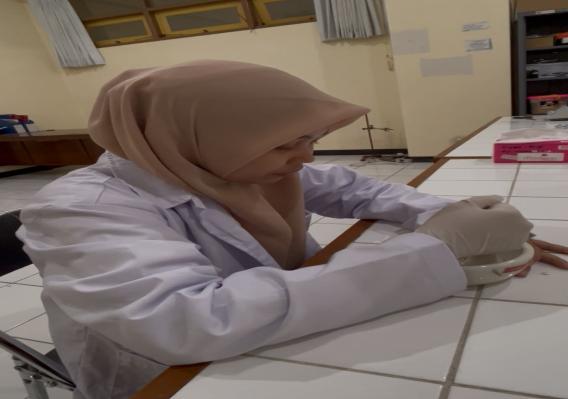
Students from the Faculty of Mathematics and Natural Sciences (FMIPA) at Universitas Negeri Yogyakarta (UNY) have developed an innovative dental health biomaterial in the form of a nano-hydroxyapatite (n-HAp) gel derived from tiger snail shells and combined with natural biopolymers from Ajwa dates, miswak, and propolis. The innovation is designed as an enamel remineralization agent while also serving as an antibacterial treatment against bacteria that cause dental caries. The project was proposed under the Student Creativity Program in Exact Research (PKM-RE) as an effort to provide an environmentally friendly dental health solution based on local resources.
The research is led by Eliana Diah Puspita Arum, a Physics undergraduate student, together with team members Lutfi Puspita Meliasari, Ratri Yulina Setiati (Physics), Melisa Sekarlina Putri Dayani (Biology Education), and Rizky Amin Saputro (Chemistry). Each member contributes to various stages of the project, including material synthesis, biocomposite fabrication, antibacterial testing, material characterization, and scientific publication preparation.
According to Eliana, the research was motivated by the high prevalence of dental caries in Indonesia, which reached 82.8 percent based on the 2023 Indonesian Health Survey (SKI). Untreated dental caries can lead to a range of complications, from gingivitis to serious oral infections. Therefore, the team sought to develop a sustainable biomaterial capable of supporting enamel repair while combating harmful oral bacteria.
The study utilizes biogenic waste from tiger snail shells (Babylonia spirata L.), which contain approximately 97 percent calcium carbonate, as the primary raw material for synthesizing nano-hydroxyapatite. This material was selected because its composition closely resembles the inorganic components of human teeth, making it highly suitable for enamel remineralization. The incorporation of Ajwa dates, miswak, and propolis is expected to enhance antibacterial activity against caries-causing bacteria such as Streptococcus mutans, Streptococcus sanguinis, and Lactobacillus acidophilus.
The research is being conducted at several laboratories, including the Biomaterials Physics Laboratory, Biology Laboratory, and Integrated Laboratory of FMIPA UNY, as well as the Integrated Research and Testing Laboratory (LPPT) of Universitas Gadjah Mada (UGM). The methodology involves synthesizing nano-hydroxyapatite through the sol-gel method, producing biocomposites from Ajwa dates, miswak, and propolis, and formulating gel products with varying concentrations of n-HAp. Material characterization is performed using X-Ray Diffraction (XRD), Fourier Transform Infrared Spectroscopy (FTIR), and Scanning Electron Microscopy (SEM), followed by antibacterial activity testing.
The team aims to identify the optimal gel formulation with excellent crystal structure, uniform morphology, and strong antibacterial performance against dental caries pathogens. Preliminary characterization results indicate high crystallinity and uniform material morphology, suggesting that the developed gel has strong potential for dental health applications.
Through this research, UNY students seek not only to create an innovative dental health product but also to promote the utilization of local resources and the transformation of biogenic waste into high-value products. The innovation is expected to become a safe, affordable, sustainable, and environmentally friendly alternative for preventing dental caries while supporting the circular use of natural resources.
The project aligns with several Sustainable Development Goals (SDGs), particularly SDG 3 (Good Health and Well-Being), SDG 9 (Industry, Innovation and Infrastructure), and SDG 12 (Responsible Consumption and Production) through its contributions to healthcare innovation, scientific advancement, and sustainable waste utilization.