Equal Access to Public Universities: Universitas Negeri Yogyakarta Facilitates Students with Disabilities in UTBK with Inclusive Services
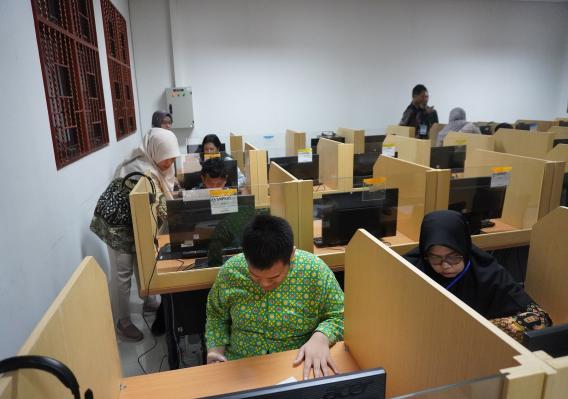
A calm and different atmosphere was observed at the IDB Building of the Faculty of Economics and Business, Universitas Negeri Yogyakarta (UNY), on Thursday (April 23, 2026), as several visually impaired participants took part in the Computer-Based Written Test for the National Selection Based on Test (UTBK-SNBT).
With the support of special assistants, disability-friendly software, and adapted examination rooms, UNY ensured that every participant could take the test equally and optimally.
This initiative reflects UNY’s strong commitment to providing equal access to higher education, especially for students with disabilities. The services provided were designed to create a comfortable, safe, and accessible testing environment.
Head of the UNY Admission Unit, Dr. Bambang Saptono, stated that UNY continues to accommodate participants with special needs. This year, there were 6 visually impaired participants, 3 physically disabled participants, and 8 deaf participants taking the UTBK at UNY.
To support physically disabled participants, UNY arranged exam locations in easily accessible areas, provided wheelchairs, and assigned special assistants. For visually impaired participants, the university scheduled exams in separate rooms with assistance from experienced lecturers from the Special Education Study Program.
In addition, the technology used in the exam was specifically adapted. Computers were equipped with specialized software and audio features to support visually impaired participants. These facilities are among the most comprehensive available in the Special Region of Yogyakarta for UTBK implementation.
Beyond technical readiness, the program also highlighted the determination of participants. Despite limitations, they demonstrated strong motivation to pursue higher education and achieve their academic goals.
Through these inclusive services, UNY ensures that physical limitations are not barriers to accessing higher education. This effort aligns with the Sustainable Development Goals (SDGs), particularly SDG 4 (Quality Education) and SDG 10 (Reduced Inequalities), by promoting equal opportunities and inclusive education systems for all.